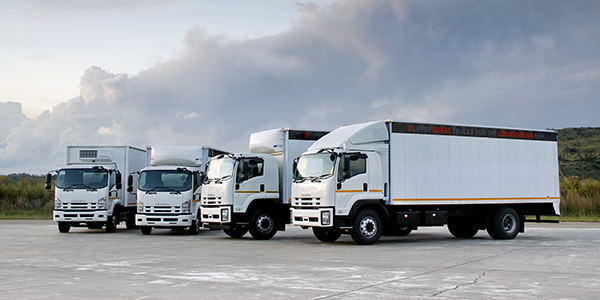
Ask three people what an “8-ton truck” is and you may get three answers. One thinks it is the mass of the truck. One thinks it is what the truck can carry. One is not sure and is about to load 8 tons of sand onto a vehicle that cannot legally carry it.
Weight ratings are the part of transport planning that people skip, and it is the part that gets vehicles stopped at a weighbridge. Here is what the numbers mean, where the legal limits sit, and how to work out what you need before you book anything.
The three numbers that matter
Tare is the mass of the vehicle itself: chassis, body, fuel, and nothing else. An empty truck standing on a weighbridge is showing you its tare.
GVM (Gross Vehicle Mass) is the maximum the vehicle is permitted to weigh once it is loaded. It is set by the manufacturer and it is a legal ceiling, not a target to negotiate with.
Payload is what is left over: GVM minus tare. That is the mass of cargo you can legally carry.
When the industry describes a “4-ton” or “14-ton” truck, it is almost always referring to payload. So a 14-ton dropside is a vehicle rated to carry roughly 14 tons of cargo, and its GVM will be considerably higher than that once the vehicle’s own mass is added. The number on the side of the truck is about your load, not the truck.
A useful habit: when someone quotes you a tonnage, ask whether they mean payload or GVM. On rental vehicles it will be payload, but the question takes two seconds and saves an argument later.
What quietly eats your payload
Payload on paper and payload in practice are not the same figure. Things that come off the top before your cargo is even loaded:
- Crew. A driver and an assistant are 150 kg or more before anyone has lifted anything.
- Pallets. A standard wooden pallet is roughly 20–25 kg. Twenty of them is close to half a ton of nothing but pallet.
- Packaging and dunnage. Crating, strapping, timber, load bars and blankets all count.
- Fitted equipment. A tail-lift, a crane, or a refrigeration unit adds to tare, which reduces payload. A crane truck carries less cargo than a plain dropside of the same class for exactly this reason.
- Water. Sand, aggregate, topsoil and timber all gain mass in the rain. A load that weighed correctly on Friday can be over on Monday.
Plan to about 90% of rated payload and you will rarely be caught out.
Where the legal limits sit
Payload is not the only ceiling. The National Road Traffic Regulations, 2000 also limit how much mass may sit on each axle, and how much a combination may weigh in total. The headline figures:
Preview — narrow the window to check the mobile behaviour.
| Limit | Maximum permissible mass |
|---|---|
| Single axle, four wheels | 9 000 kg |
| Tandem axle unit, four wheels per axle | 18 000 kg |
| Tridem axle unit | 24 000 kg |
| Any vehicle combination (with limited exceptions) | 56 000 kg |
A small tolerance is applied at weighbridges, but it is measured in a couple of percent, not in “close enough”.
The practical consequence is that a legally loaded truck can still be illegally loaded. Put 8 tons of bricks over the rear axle of a truck rated for 8 tons and you may be under GVM but over on that axle. Load distribution matters as much as total mass: spread the weight along the deck, keep the heaviest items low and over the axles, and do not stack everything against the headboard because it is easier to strap there.
Why overloading costs more than the fine
The fine is the cheapest part.
- Braking distance increases. An overloaded vehicle needs more road to stop, and the effect is worst in the wet and on a downhill.
- Tyres and brakes fail faster. Heat build-up on a long run is where an overloaded vehicle turns into a stationary vehicle.
- Insurance can be repudiated. If the vehicle was over its legal mass at the time of an incident, cover for the cargo and the vehicle may fall away.
- Rental terms are breached. Operating a hired vehicle outside its rated capacity sits outside the trading terms on almost every rental agreement, which moves the cost of any damage squarely onto the hirer.
- Roads take the damage. Road wear rises sharply with axle load, which is why enforcement exists in the first place.
Working out what you actually need
Two questions settle most bookings.
1. Will the load weigh out or cube out? Dense cargo (bricks, tiles, steel, liquids, paper) hits the payload limit long before the deck is full. Light bulky cargo (furniture, packaging, insulation, empty containers) fills the deck while the payload sits half used. Weigh-out loads are a mass problem. Cube-out loads are a volume problem, and the answer there is deck length and body type, not tonnage.
2. How does it get on and off the vehicle? This changes the body type rather than the size. Forklift access on both sides points to a curtainside. Kerbside offloading by hand suits a dropside. Secure, weatherproof cargo points to a panel van body. Anything that has to be lifted onto the deck on site points to a crane truck. Temperature-controlled goods need a refrigerated body regardless of what the mass calculation says.
Answer those two, add the payload margin, and the vehicle chooses itself.
Load capacity across the Smart Truck Hire fleet
For reference, here is where our vehicle classes sit:
Preview — narrow the window to check the mobile behaviour.
| Vehicle type | Load capacity |
|---|---|
| Bakkies | 1 ton |
| Dropside trucks | 4 to 14 tons |
| Curtainside trucks | 4 to 8 tons |
| Panel van trucks | 4 to 26 tons |
| Refrigerated trucks | 1 to 14 tons |
| Crane trucks | 8 to 14 tons3 to 5-ton crane |
| Truck tractor and trailer | Up to 26 tons |
| Superlink | Up to 32 tons |
Full specifications for each class are on the bakkie hire, van hire, and truck hire pages, with dedicated pages for refrigerated trucks and crane trucks. Ongoing requirements are usually better served through long term rental than repeat daily bookings.
If you are not certain which rating suits your load, tell our team what you are moving and how it is packed. Request a quote or call 010 448 4397 and we will match the payload and the body type to the job.